I navigate the tech landscape without a formal university degree. That reality taught me early on that career survival isn’t about what you already know it’s about how fast you can adapt.
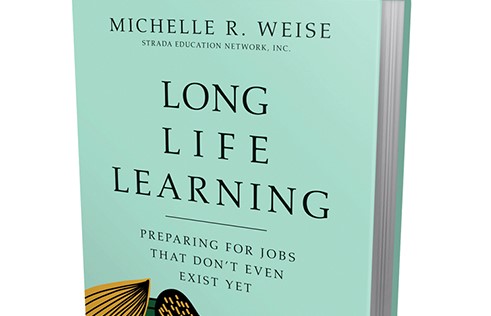
This is why Michelle R. Weise’s book, Long Life Learning, hits so close to home. It exposes the massive crack in how modern businesses operate, they expect the education system to hand us perfectly formed, job ready professionals, and businesses are reluctant to train them when they arrive.
Here are the foundational lessons from Weise’s book that every organisation needs to absorb before the skills gap swallows them.
The Broken Pipeline
Academic institutions must face the reality that they are not effectively preparing students for the modern workforce.
Weise cites troubling data revealing that around 43% of recent college graduates are underemployed in their first job. We assume universities output candidates ready to tackle complex, AI driven business problems. They don’t. They output people who are good at passing exams.
Academia needs a radical realignment with actual job markets, but until that happens, employers have to stop relying on degrees as a proxy for capability.
The “Efficiency” Trap of Hiring
There is an old corporate joke: CFO asks, “What happens if we invest in developing our people and they leave?” CEO replies, “What happens if we don’t, and they stay?”
According to Weise, companies that invest in learning and development see up to a 14% increase in productivity. Despite this, most employers hesitate to invest in workforce development. They prefer the “efficiency” of hiring external talent who already possess the exact skills needed today.
This short term focus saves money today, but costs you the company tomorrow. You lose institutional knowledge, you erode company culture, and you build a brittle workforce that cannot pivot when the technology changes.
You Can’t Buy a Learning Culture
Many companies think buying a team license to an online course platform constitutes a “learning culture.” It doesn’t.
Weise demonstrates that learners with adequate wrap around support networks are 3.2 times more likely to complete courses successfully.
The sheer volume of information one must master to stay relevant today is overwhelming. If you want your team to learn new systems, you have to build a nurturing environment that includes mentorship, protected time to study, and psychological safety to fail.
The practical upshot
Companies with genuine learning cultures have 30-50% higher engagement rates. In an AI driven world, learning isn’t a distraction from the work, learning is the work.
Weise notes that 2 in 3 employers admit to overlooking candidates based on their educational background. As someone who has faced those exact barriers, I can tell you that a degree is not the definitive measure of a person’s capability. The World Economic Forum and the OECD are practically begging companies to shift focus toward adaptability, emotional intelligence, and systems thinking.
We don’t need to reinvent the wheel, but we do need to abandon our comfort zones. Stop hunting for the perfect, pre-packaged candidate. Start building the resilient, continuous learners you actually need.