I’ve always enjoyed Dilbert, xkcd and many more. I love the expression through a situation. However, my drawing is average at best and finding the time to commit to do so is even harder. So, back to the AI investigation we go.
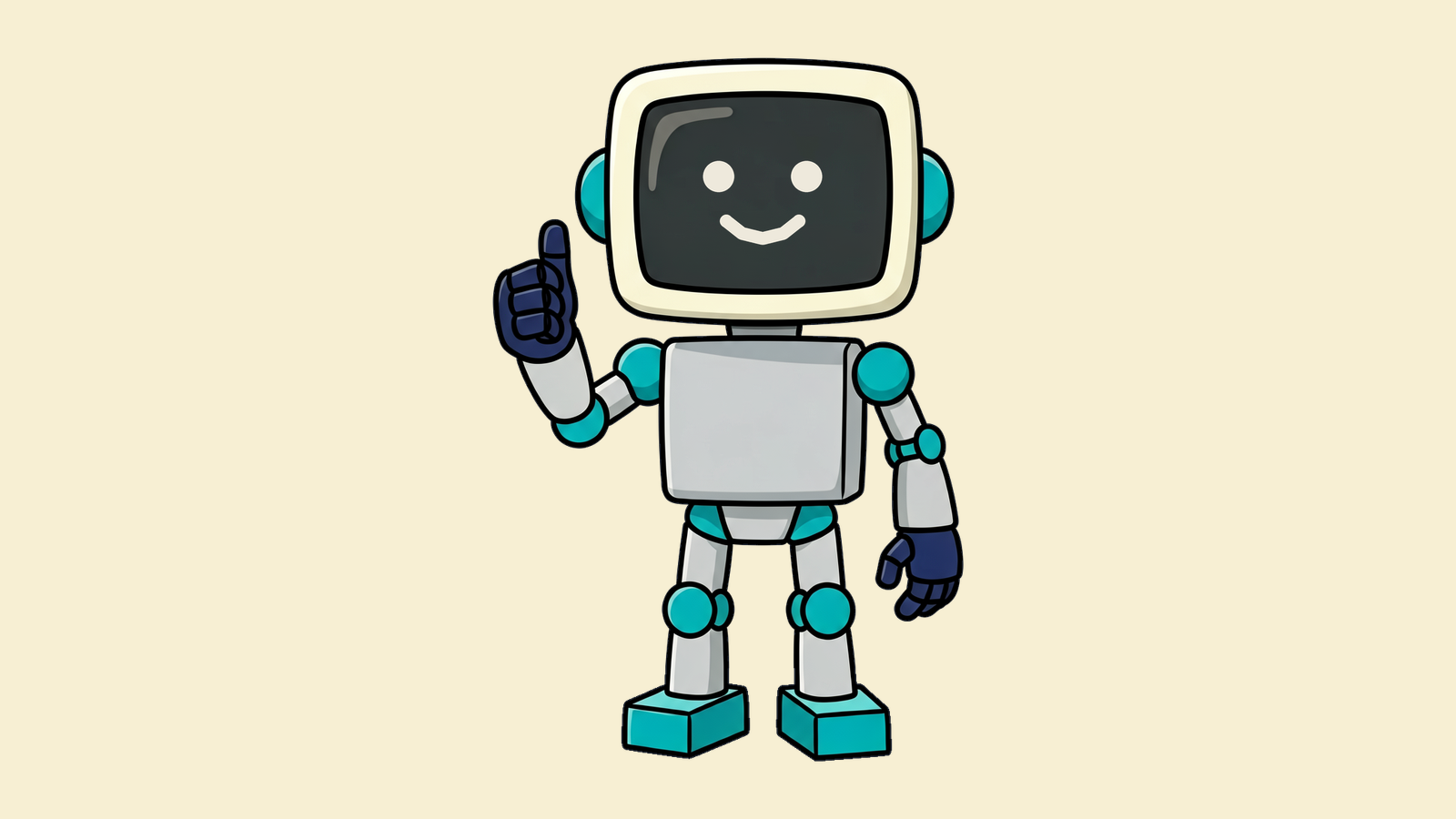
This is when I came up with Keith, my anthropomorphic little traditional robot with an attitude. I can just imagine the frustration of an AI (if conscious of course, a much wider debate) having to put up with us humans offloading tasks with minimal guidance or knowledge. Like the IT support of old and now on steroids because “It’s fine the AI will do it.”
Who Keith is
Keith is the AI in every post. A robot with a TV for a head, capable and literal and a bit put-upon. He does exactly what he’s given, and he knows when what he’s been given is rubbish. The humans make the mess and Keith notices.
The strips see work from the AI’s side of the screen. That’s how I imagine AI would feel about us if it had feelings (who knows).
He started as a paper cut-out in the corner of my post images. Now he has his own comic strip, Keith’s AI Adventures, which is an agent’s journey putting up with humans. Strips will live on this site and go out on LinkedIn.
The setup
Everything runs locally on a Mac Studio with 64 GB of memory, through mflux, which runs image models natively on Apple silicon.
Two open models do the drawing. ERNIE-Image-Turbo draws the first panel of each strip from a written description of the scene. FLUX.2 klein 4B, released under Apache 2.0, then edits that panel to make the next ones. A batch of four post images takes about fifteen minutes. A comic panel edit takes about fifty seconds.
In fact, I have been quite blown away with the speed and the quality of the ERNIE-Image-Turbo model. It takes reference images very well, small tweaks are handled efficiently and generation times on an M1 are impressive. For the in depth focused updates to an image FLUX.2 klein 4B keeps the aesthetic and again is pretty fast in the grand scheme of things for an open model.
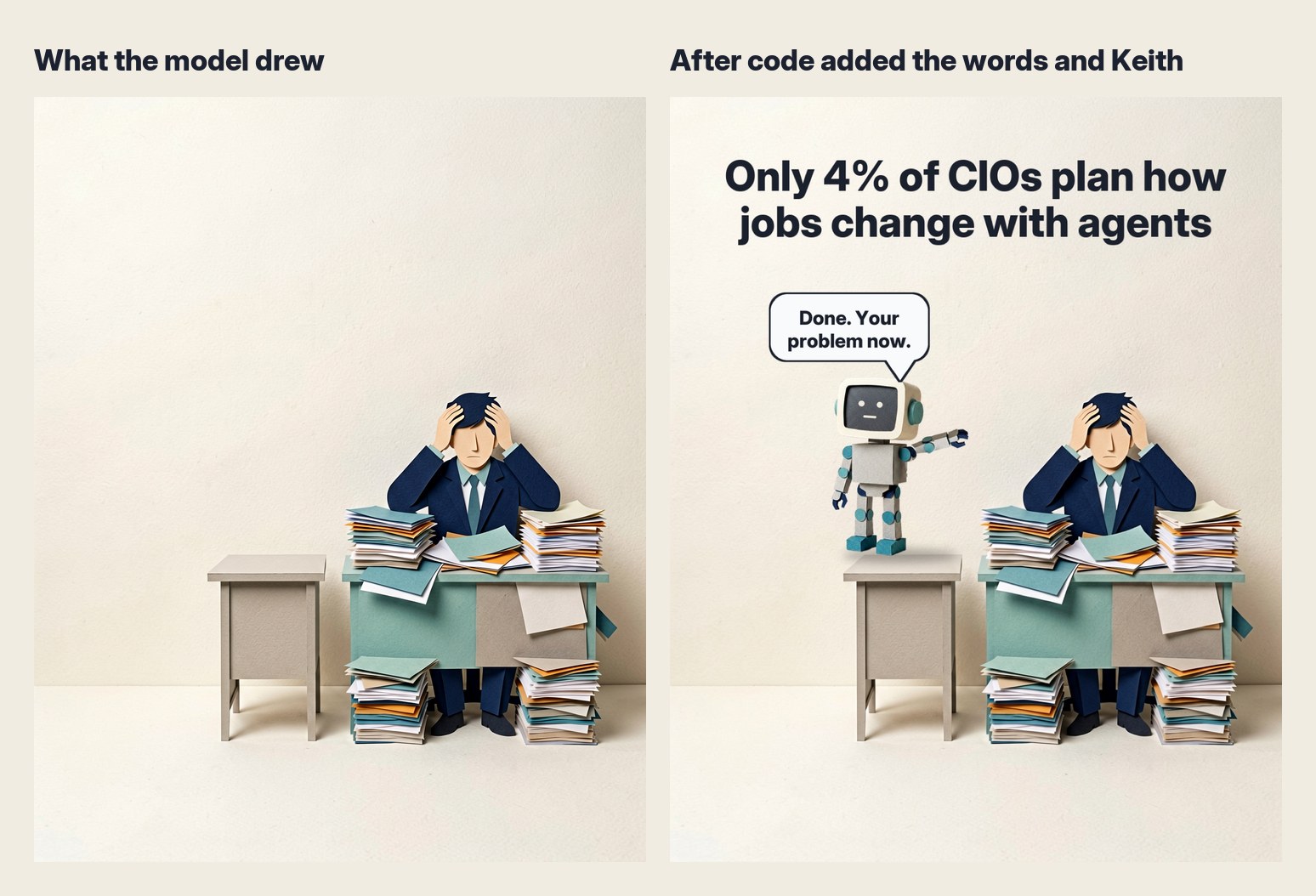
Then a few hundred lines of Python do everything else. They draw Keith’s face, set every word, add the speech bubbles and lay out the strip.
What I’ve learned
The models can’t spell
In testing, ERNIE misspelt about a third of the headlines I asked it to draw. So the model never draws a single letter. It makes a clean image and code sets the text in a proper typeface afterwards. This one rule fixed more problems than any model upgrade.
They draw what’s there, never what’s missing
Ask for a pier with a gap in it and you get a perfectly good pier. Ask for an untouched coffee and you get a coffee. If the point of your picture is an absence or a small detail, an image model will quietly smooth it away. The idea has to be something big and visible, or it has to be added afterwards.
Describe the layout, not the mood
Asking for “plenty of empty space” did nothing. Asking for “the left third is plain wall and floor” worked first time. These models follow a floor plan far better than an adjective.
Every new image is a new world
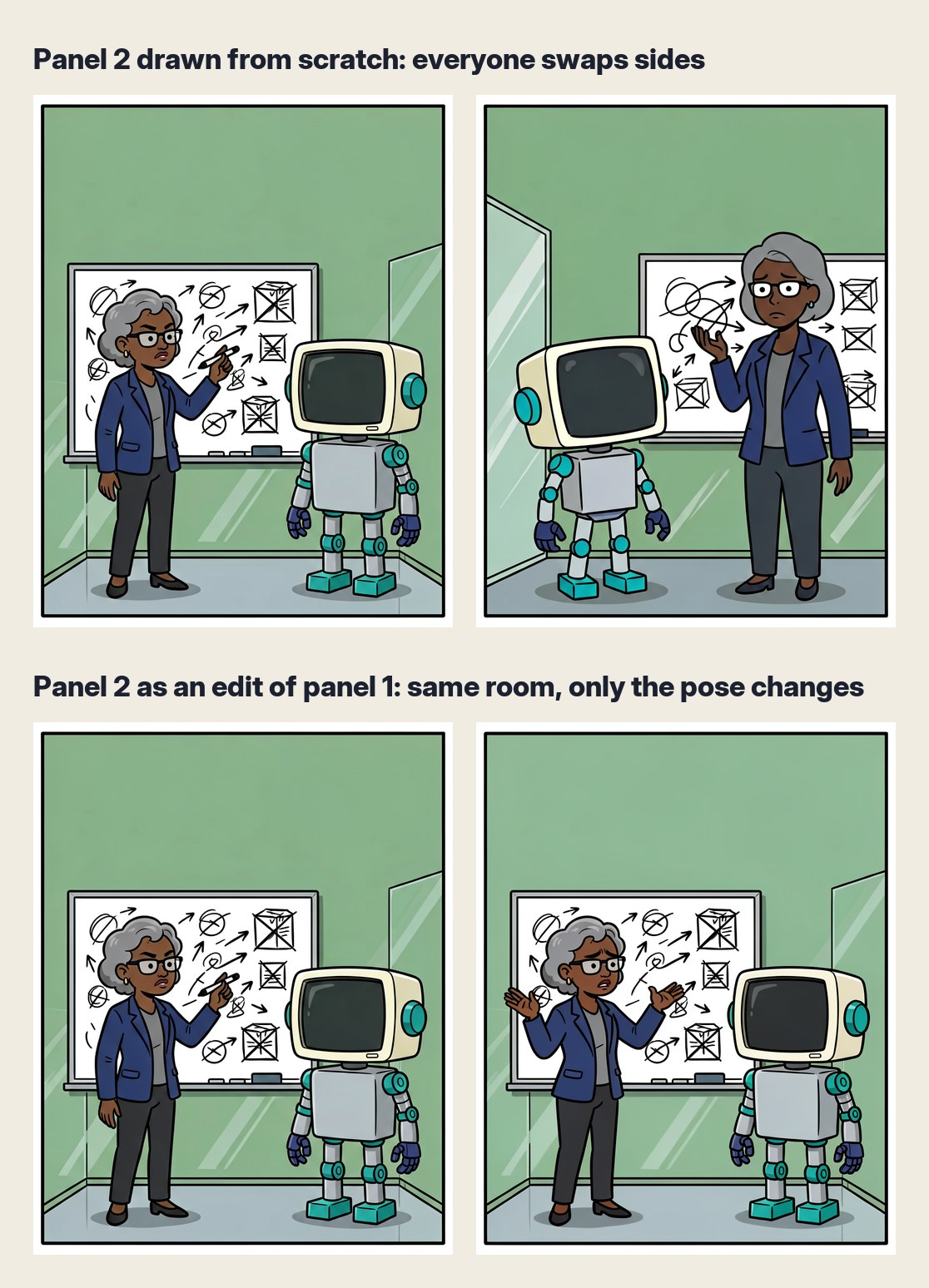
This was the big one for the comic. My first strips drew each panel from scratch, and Keith’s kitchen changed colour between panels while he wandered across the room. A comic where the furniture moves is a dream sequence. The fix was to draw the first panel once and make every later panel an edit of it. Same room, same camera, same people in the same places, and only the poses change. The edit model puts Keith’s screen on the same pixels from one panel to the next.
Say who you mean
Tell the edit model “the robot shrugs” and it will happily make the woman next to him shrug instead. The prompt has to point at someone by position, as in “change only the robot on the right”. It also gave Keith a third arm once. Somebody still has to look at every panel.
Keep the punchline away from the model
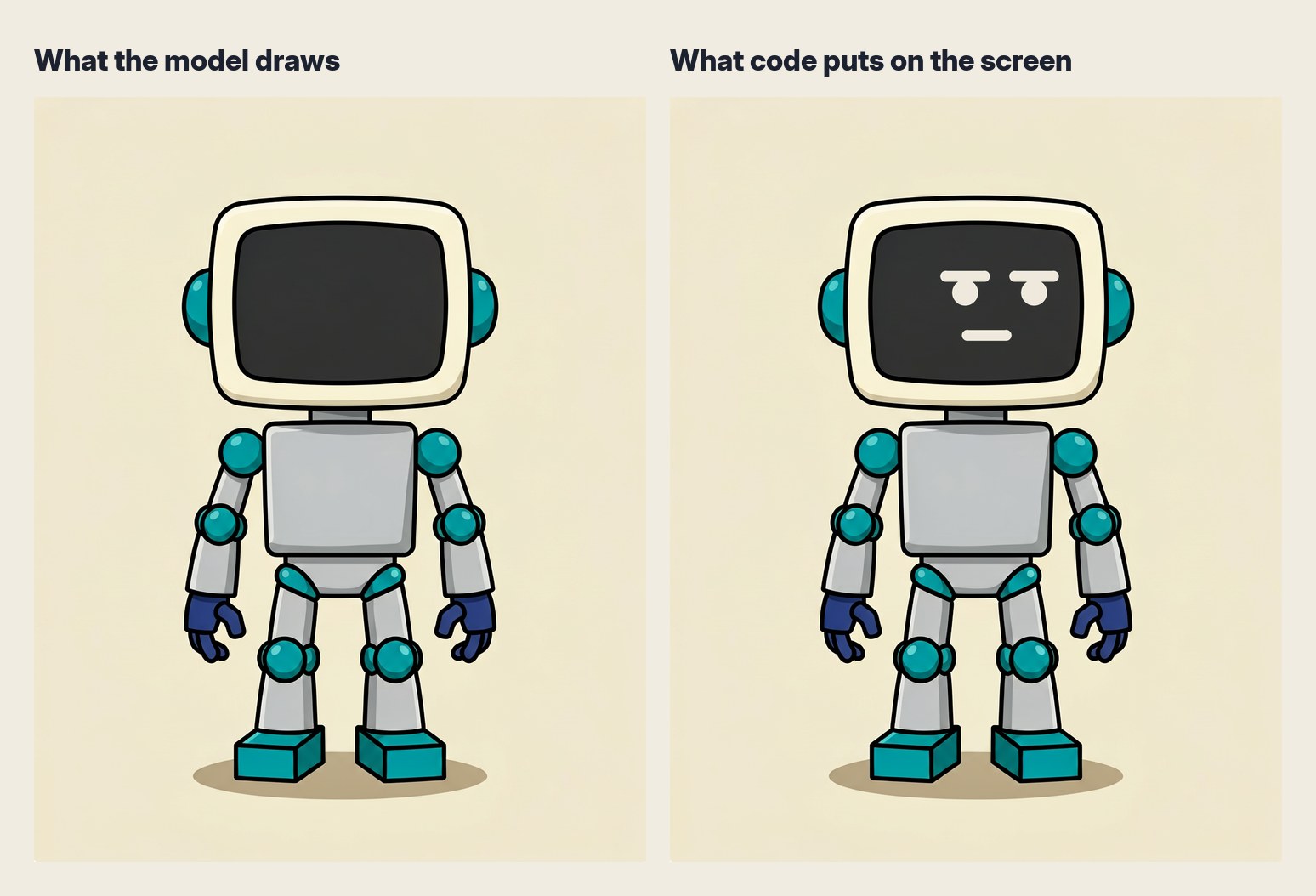
Keith’s screen is drawn blank, and code draws his face on it afterwards from a set of fifteen expressions. In a comic the expression usually is the joke, so it’s the last thing I’d leave to chance. It also means animating him later is a frame swap rather than a re-render. Working with Claude Code this was a really quick stage to implement.
The pictures were the easy bit
Once the pipeline worked, the hard part turned out not to be the images at all. It was the jokes because a) I’m not that funny b) I don’t want to be sacked or blacklisted for roles.
Sometimes, even Claude comes up with a cracker but nothing leaves automatically and is always reviewed.
What’s next
There’s a backlog of five strips, starting with Keith being introduced at an all-hands as the company’s new AI agent. He takes that word rather literally. They’ll appear here as they’re signed off, and later some of them will move, Keith blinking and loading and switching off when he’s had enough.
Open source image generation is ready for real work if you let it do the part it’s good at. The model draws the room. Everything that has to be right is still up to us.
The first three strips
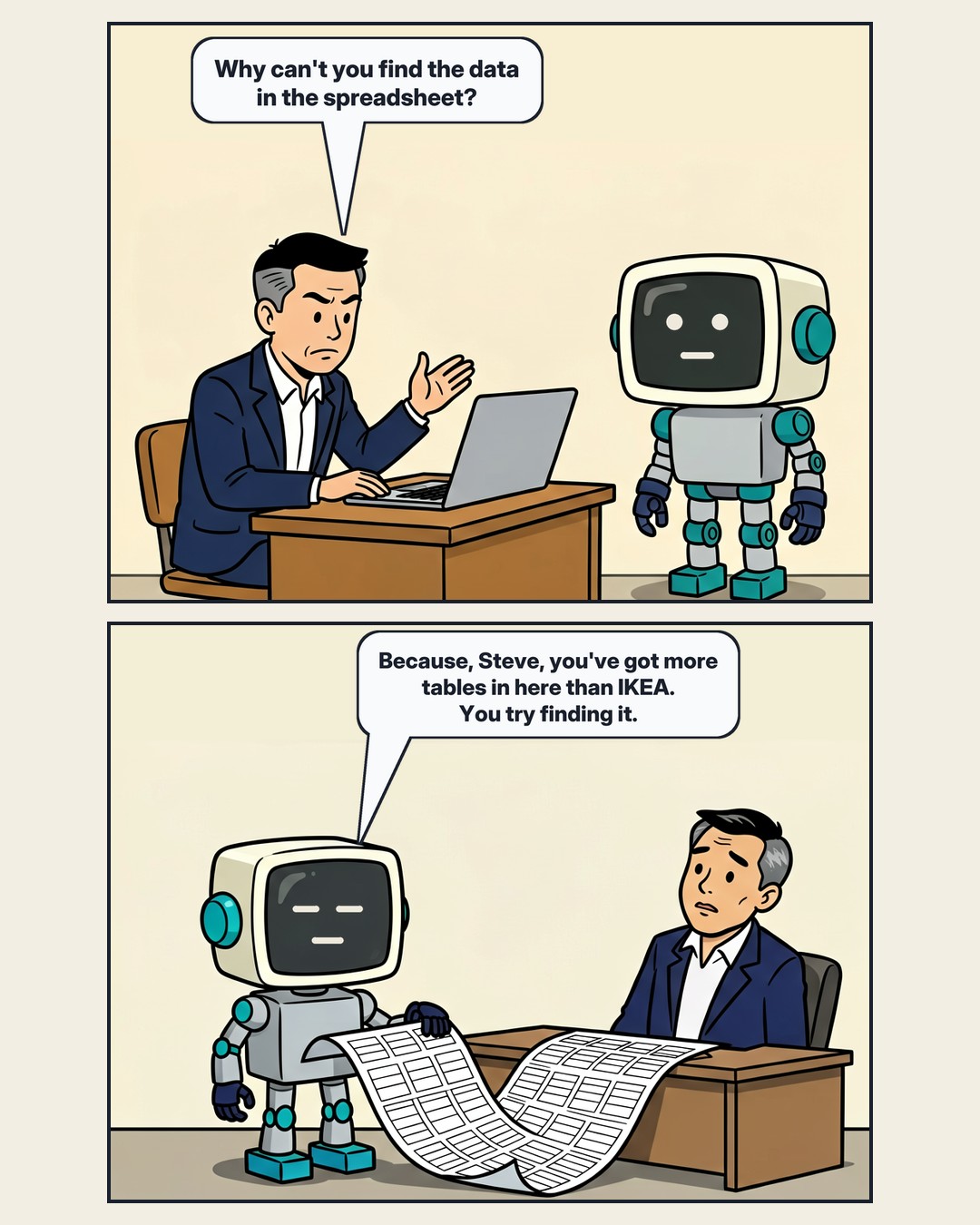
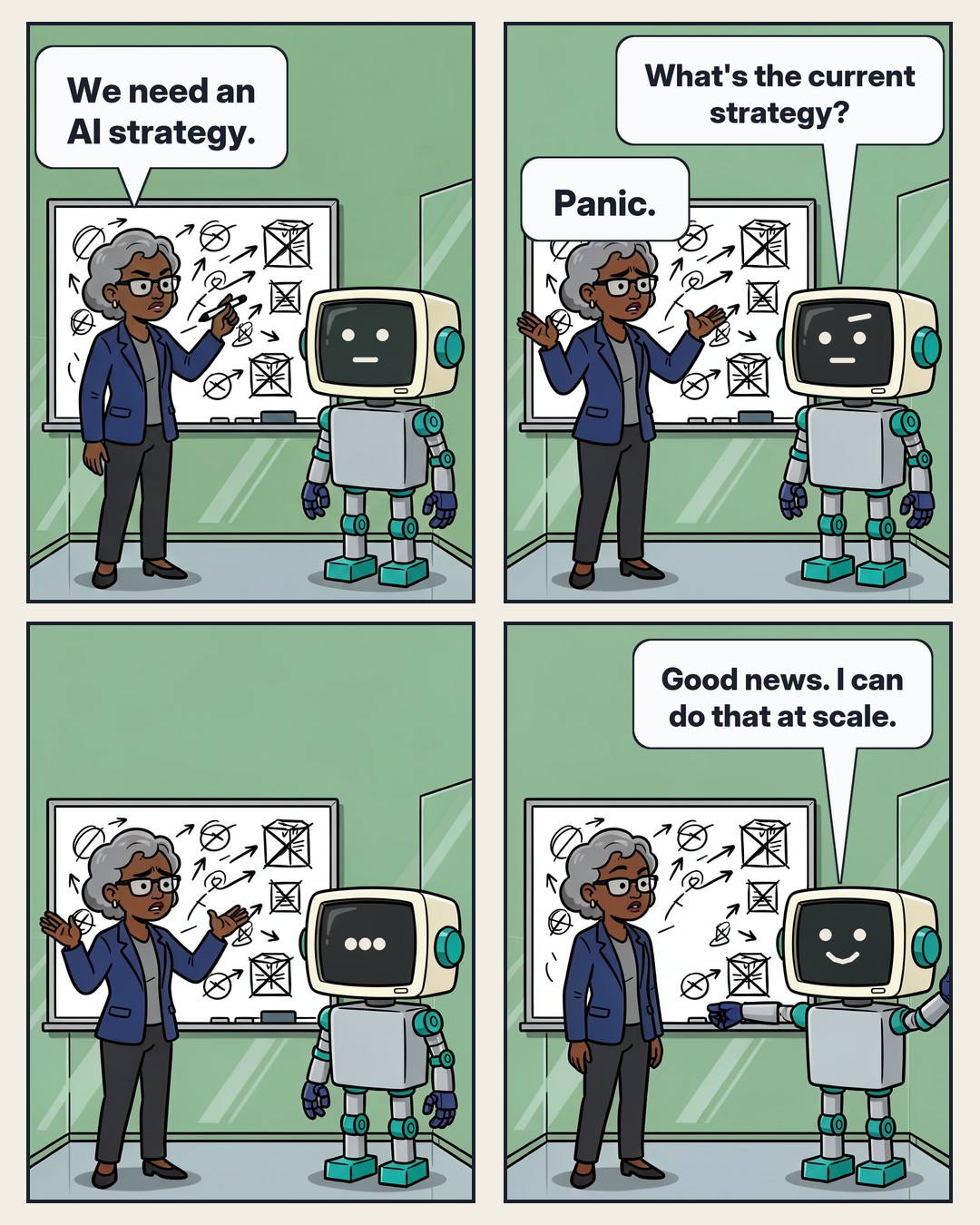
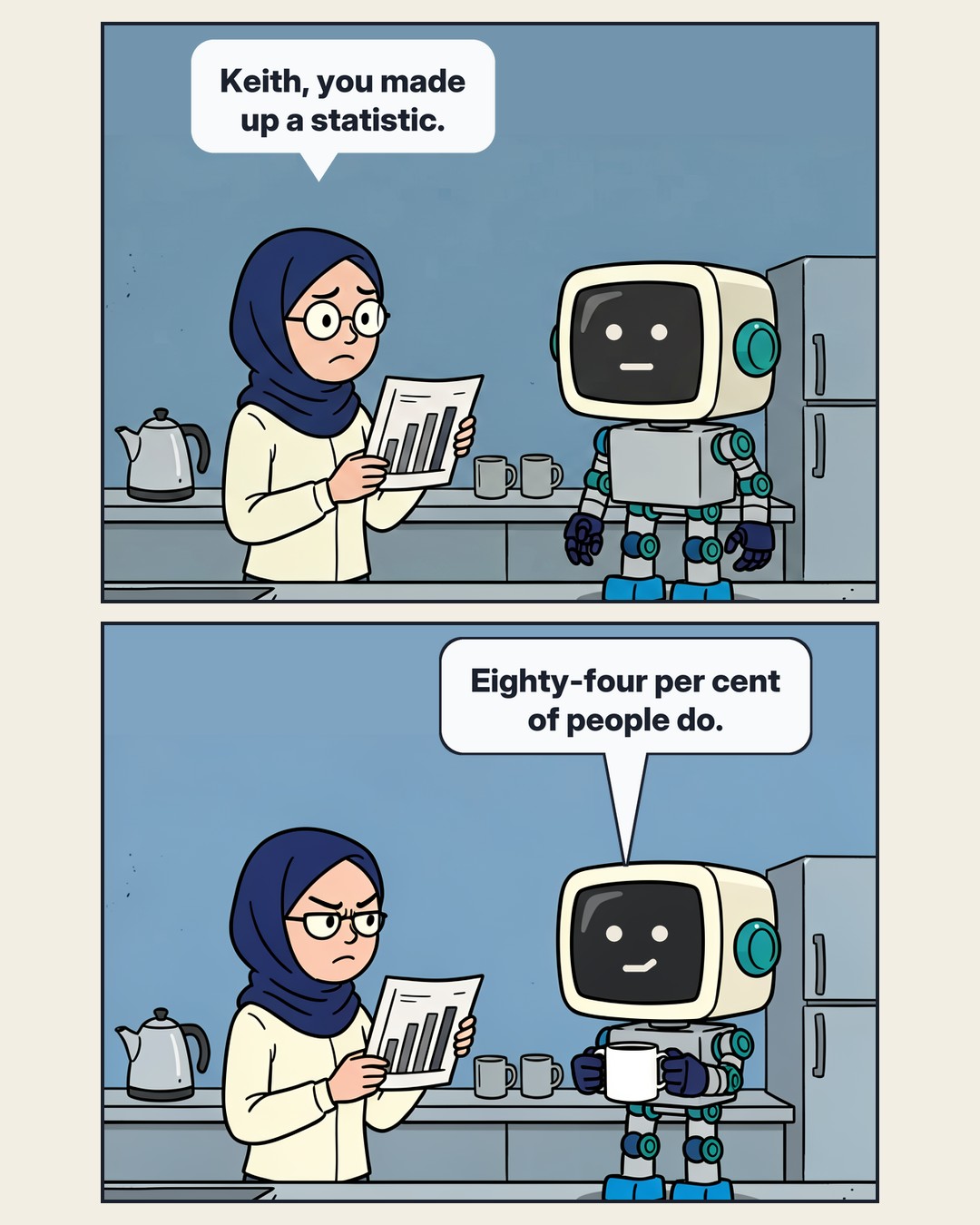
Over time Keith may well get a page of his own.