A long chat should burn through your allowance, because the whole conversation gets read again before every reply. It doesn’t, and caching is why.
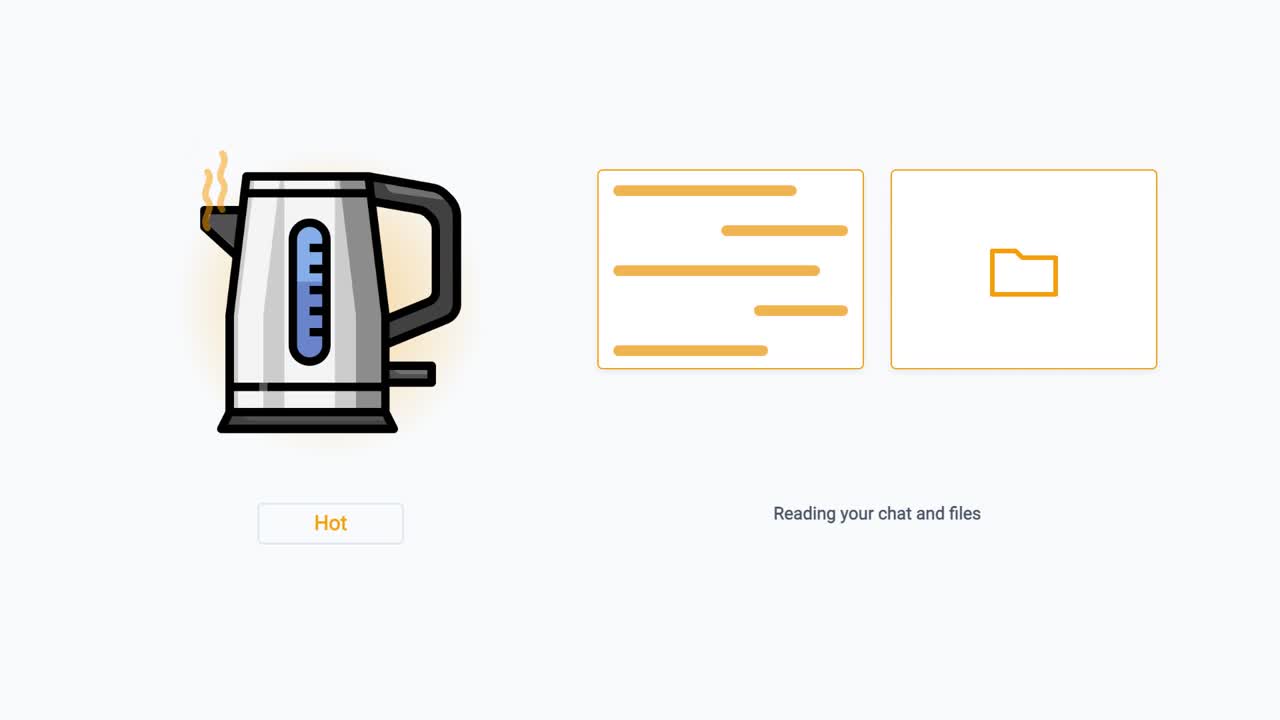
The kettle is the whole idea: boiling is the slow part, and while it’s still hot the next cup is almost instant. Keep a chat going and the work stays warm for a few minutes, so replies come back quicker and cost you less.
The part worth holding on to is what caching is not. A hot kettle doesn’t hold any more water, so caching buys you time and allowance but no extra room in the window. That room comes from summarising the oldest messages, and a summary keeps the big picture while letting the small things go.
Two habits come out of it: keep the things that don’t change in a project, and keep going while it’s warm.
ChatGPT and Gemini cache the same way behind the scenes, but only Claude’s help pages say how it affects your allowance, so that’s the app this video names. Checked in September 2026. This is an independent explainer, not affiliated with Anthropic.
Transcript
Before every reply, Claude reads the whole conversation again. So a long chat should eat through your allowance fast. It doesn't. That's caching, and it's simpler than it sounds.
Think of a kettle. Boiling it is the slow part. While it's still hot, the next cup is almost instant. Claude works the same way. Reading your conversation, and your project files, is the boiling. Keep the chat going, and it stays hot for a few minutes. So the next reply is quicker, and it uses less of your allowance.
Walk away for long enough and the kettle cools. The next reply has to boil it all again. Nothing is lost. It just starts from cold.
Now, a long chat eventually runs out of room. So here's the question. Does caching give it more room?
No. A hot kettle boils quicker, but it doesn't hold any more water. Caching saves you time and allowance. It doesn't give a chat more room, and it doesn't remember anything. When a chat gets too long, Claude makes a short summary of the oldest messages, and that's what frees the room.
A summary is a fair trade, but it is still a summary. It keeps the big picture and lets the small things go, a number you gave it, or a rule from early on. And each new summary is made from the last one, so what one leaves out, the next never sees. You still see every message on your screen. The AI is reading the short version.
In the Claude apps this happens on its own, so there's nothing for you to set up. Files in a project are cached, so only what's new counts against your allowance. That's why the things that don't change belong in a project: your instructions and your reference files. And if you're in the middle of something, keep going while it's warm.
Caching keeps the kettle hot, so each reply is quicker and kinder to your allowance. But a hot kettle doesn't hold any more water.