Series · 5 parts · 14 min
Data and AI
Every kind of database was built to do something the one before it couldn't. This series takes them in the order they arrived: the brief history first, then SQL and what relational means, then NoSQL, vector and graph databases, and finally how an AI that seems to remember you is using several of them at once.
Watch them in order. Each stands on its own, but the questions build.
-
 2:18
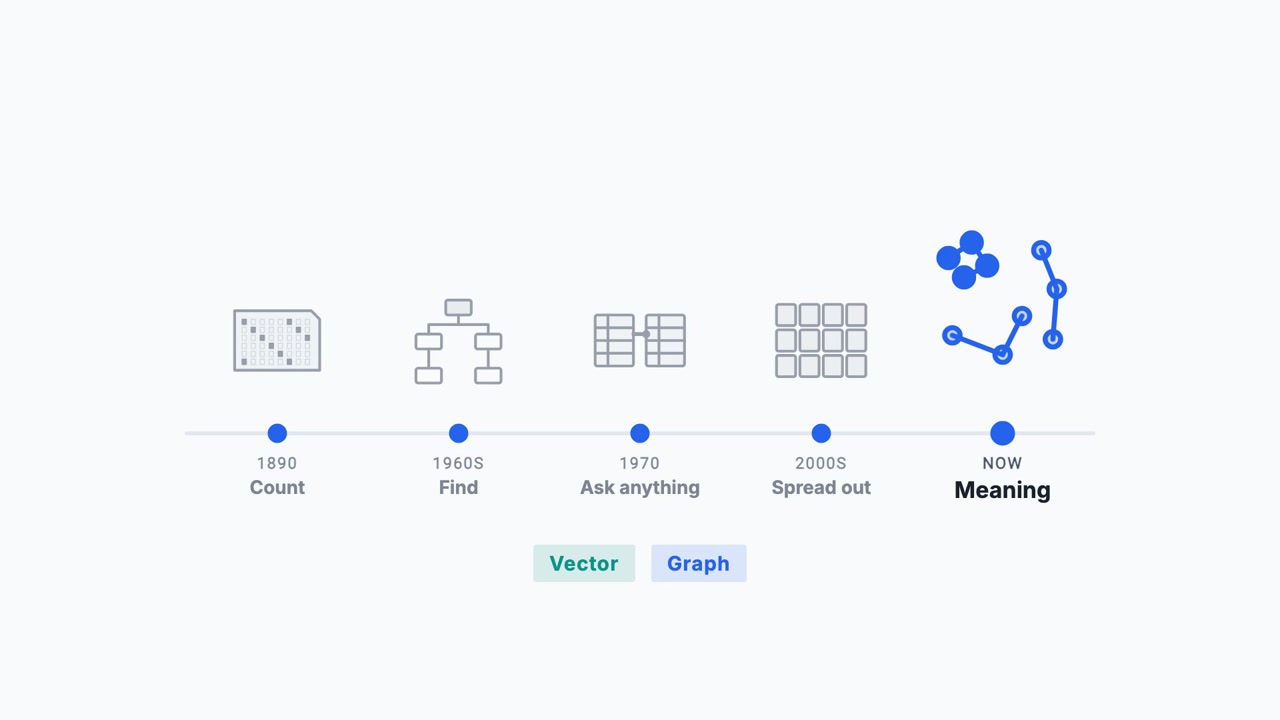
2:18 Why databases were created
A database is where your records are kept so a computer can find them. There isn't just one kind. Five big steps, each built to do what the one before couldn't, in a little over two minutes.
-
 2:55
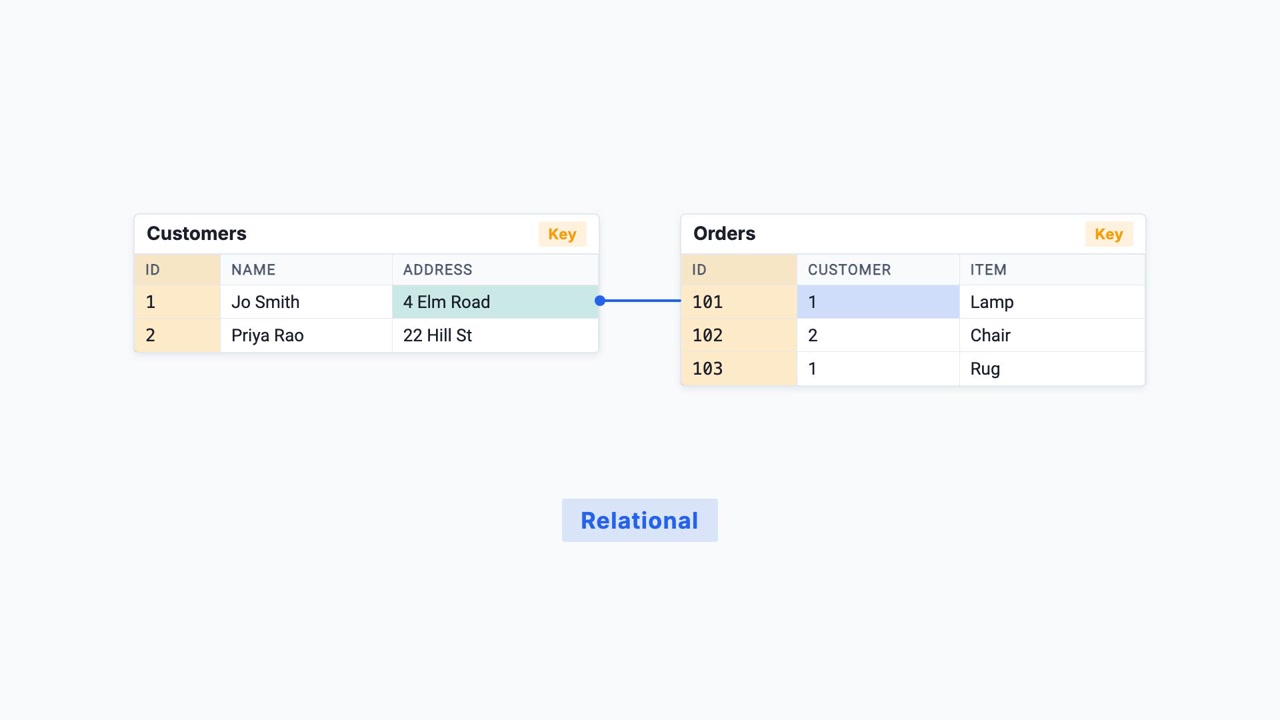
2:55 SQL explained
Why relational databases still run the world. What relational means, why a spreadsheet stops working, and what a database does instead: each fact stored once, rules that keep it honest, and a question you ask with SQL.
-
 2:36
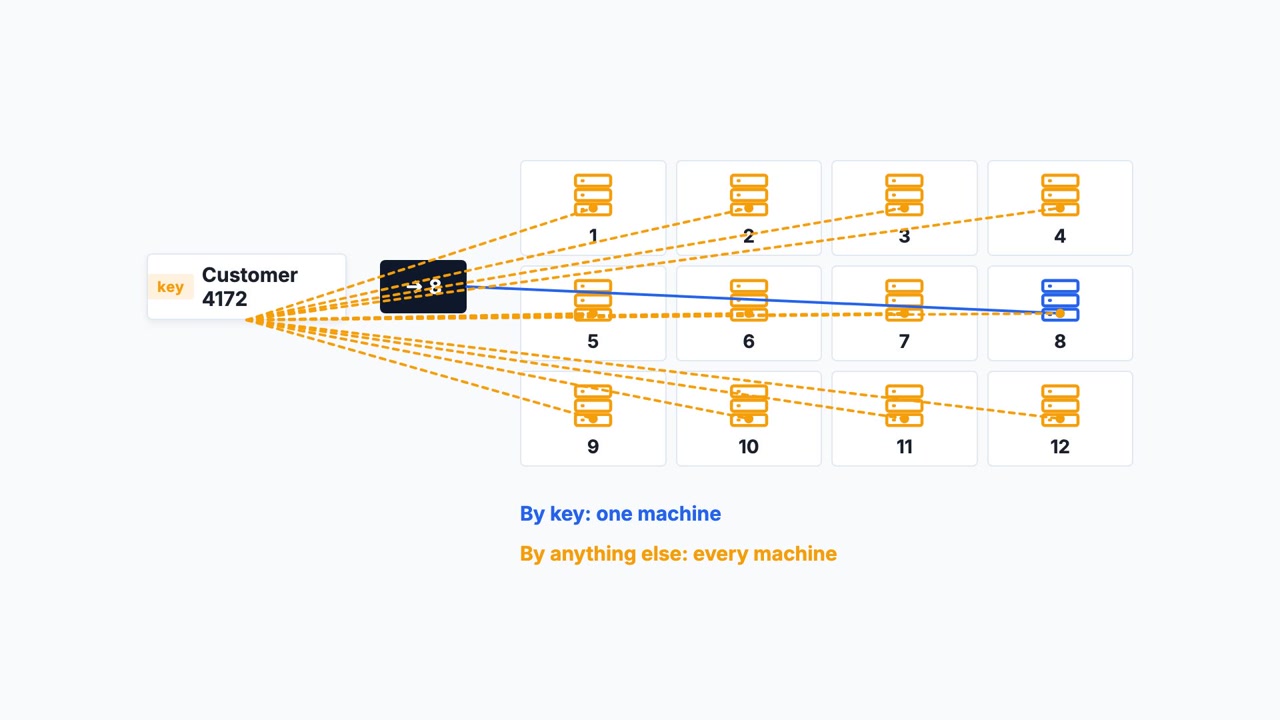
2:36 NoSQL explained
Built for records that don't all share one shape, and for more people than one machine can serve. Documents instead of rows, thousands of machines instead of one, found by their key, and the choice between agreeing first and answering now.
-
 2:29
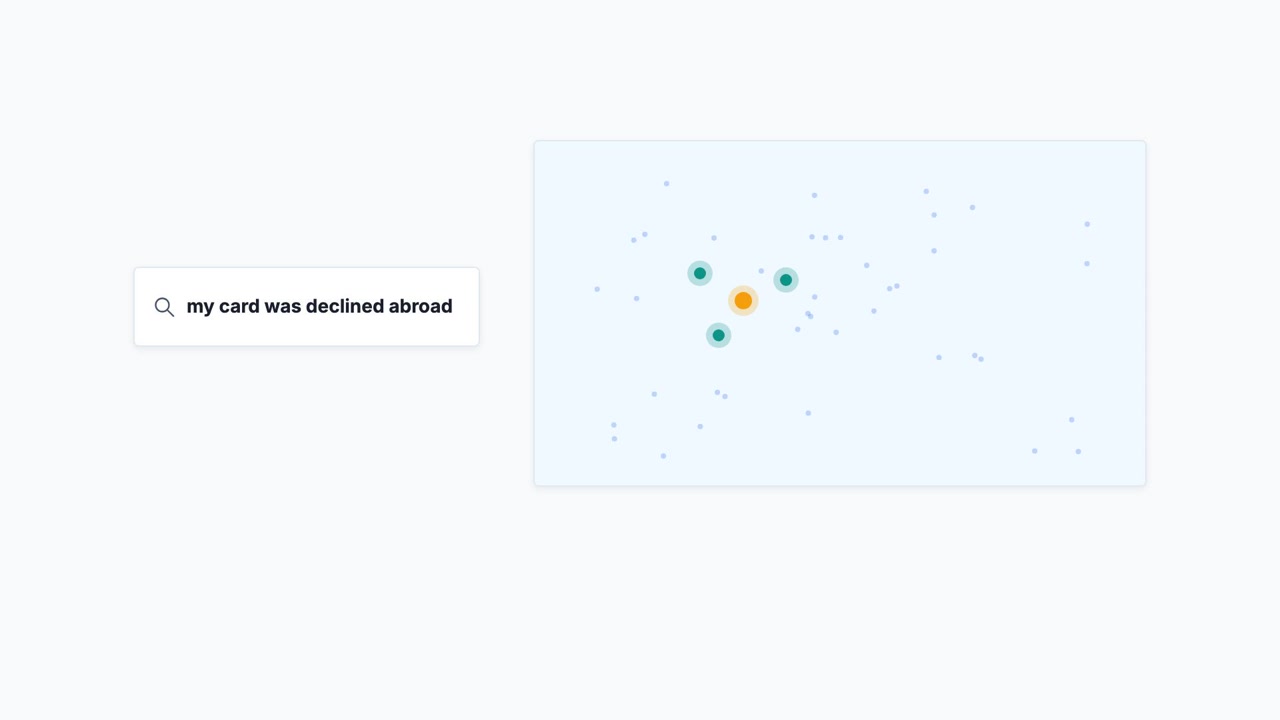
2:29 Vector databases explained
How a database finds what you mean rather than the words you typed, and how that lets an AI answer from your documents. Meaning as numbers, the nearest pieces found fast, and why the answer is only as good as what was found.
-
 3:25
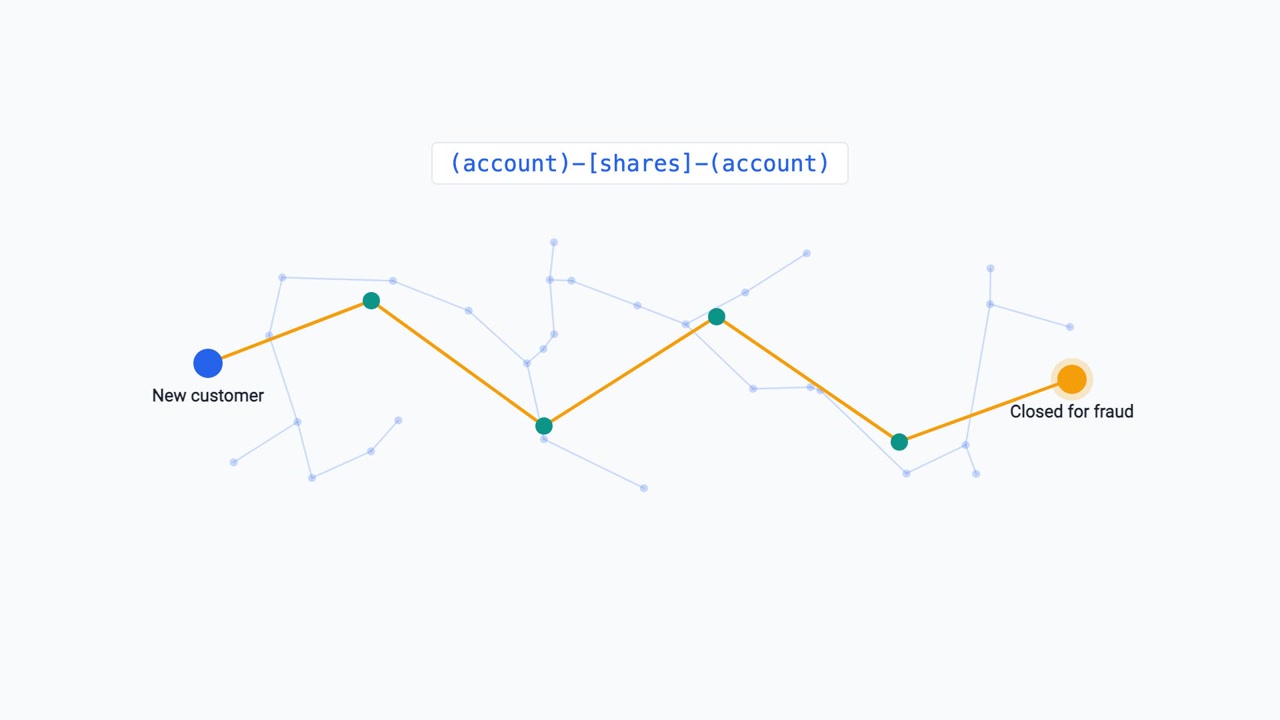
3:25 Graph databases explained
When the links are the data. How a graph database stores each link beside the things it joins, why following a chain is a step rather than a search, and where that earns its place, from fraud rings to knowledge graphs and the AI systems that use them.