Hundreds of AI models come from more than twenty organisations, and the best of them score close together. How quality is measured, what the scores miss, why price differs so much, and why the app you use a model through matters as much as the model.
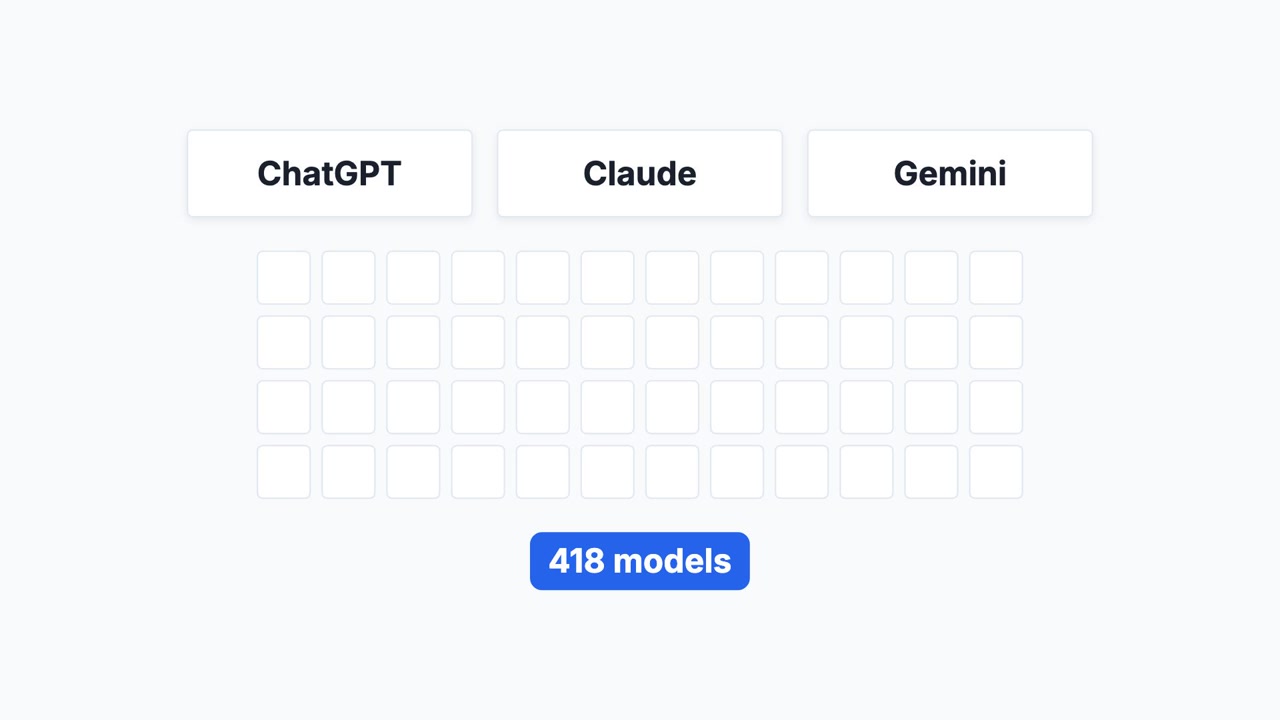
ChatGPT, Claude and Gemini are the names you hear most, but one public leaderboard ranks 418 AI models from more than twenty organisations, in the United States, France, China and beyond. Some makers keep their models on their own computers, and others let anyone download a copy.
How “best” is measured. There are two main ways to measure which is best: a test with right answers, and people voting between two answers from two hidden models. On that vote, the top four models sat about 97 points apart a year ago, and by March 2026 the gap was under 25, with the top spot changing hands.
What the scores miss. Test questions leak into training data, some tests are close to full marks, and a vote shows which answer people liked, not whether it was right.
Price varies far more than quality. On one independent test, two models got the same score and one cost eight times as much to run.
So judge the whole tool. The app you use a model through decides what it can do, how much it can read at once and what happens to your data. The same model can turn up in several apps, as Claude does inside Microsoft’s Copilot at work, and one app changes with your plan. ChatGPT’s top plan can read more than four times as much at once as its free plan.
The facts come from Arena’s text leaderboard (page dated 27 October 2026), Stanford HAI’s AI Index Report 2026, the GPQA paper (Rein and others, 2023), OpenAI on SWE-bench Verified (February 2026), the Artificial Analysis Intelligence Index and ChatGPT’s pricing page (both read 6 November 2026), Microsoft on Claude in Microsoft 365 Copilot, and GitHub Copilot’s supported models. Rankings and prices change quickly, so check the current pages. This is an independent explainer, not affiliated with any AI company.
The line to keepHundreds of models, and the best score almost the same. Judge the whole tool.
Transcript of the video
ChatGPT, Claude and Gemini are the names you hear most. But one public leaderboard ranks four hundred and eighteen AI models, from more than twenty organisations.
Some come from big American companies, like Meta, which made Llama, and OpenAI, Anthropic and Google. Others come from France, like Mistral, and from China, like DeepSeek and Alibaba. Some makers keep their models on their own computers, and others let anyone download a copy.
So how do you tell which one is best? There are two main ways to measure it. In the first, every model sits a test with right answers, much like a hard science exam paper. In the second, people compare two answers from two hidden models, and vote for the one they prefer.
A year ago, the top four models on that vote sat about ninety-seven points apart from one another. By March this year, how wide do you think the gap at the top had become?
By March, the gap had shrunk to fewer than twenty-five points. The best models have bunched together, and the top spot keeps changing hands. The model that led in March has since fallen to seventh place.
The scores have limits. Test questions leak online, and models learn them in training, like a class that's seen the exam paper. OpenAI stopped reporting one coding test for exactly that reason.
Some tests are close to full marks now, so they can't tell the best models apart. A vote also shows only which answer people liked, not whether it was the right one.
Price is where they really differ. On one independent test, two models got exactly the same score, but one cost eight times as much to run as the other.
So the model is only part of what you get. The app you use it through decides what it can do, how much it can read at once, and what happens to your data.
The same model can turn up in several apps. Claude runs inside Microsoft's Copilot at work, where your organisation's settings decide whether it's switched on. One coding app offers twenty-eight models from six makers.
Even one app changes with your plan. ChatGPT's top plan can read more than four times as much at once as its free plan.
There are hundreds of models, and the best ones score almost the same. So judge the whole tool, the model and the app you use it through.
Found this useful?
Subscribe for the next one, or tell me what you want explained. I take requests.