You’ve been in the same chat for an hour, and the answers keep getting less useful. You correct it, it apologises, and the next draft has the same problem. It’s natural to expect a longer conversation to help, but the research points the other way.
In 2025, researchers at Microsoft and Salesforce gave fifteen AI models the same tasks, either all at once or one piece after another. Given a piece at a time, the results dropped by 39% on average, and once a model got something wrong early, it kept leaning on that mistake. The models tested were from spring 2025, so treat the number as a direction rather than a rule for today’s tools.
Three signs it’s time to start again:
- It repeats itself, or brings back an answer you already said was wrong.
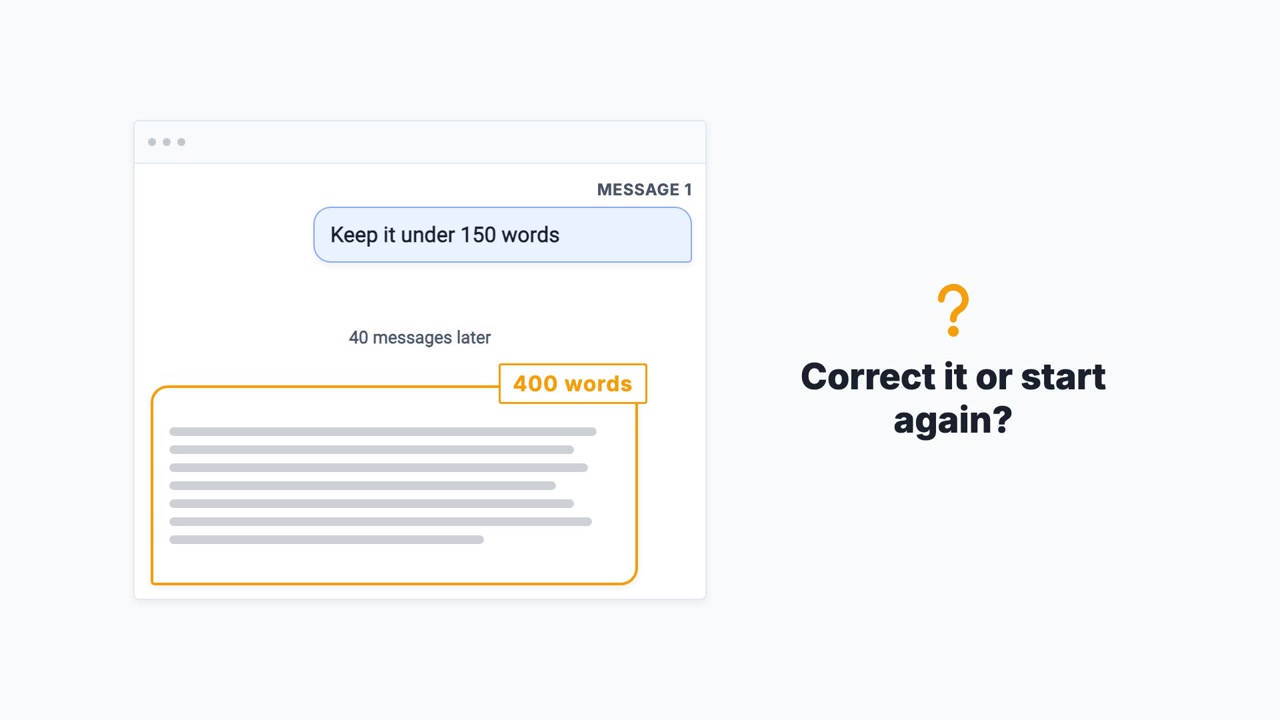
- It forgets a rule you set at the start, such as a word limit or a plain English style.
- The answers get longer and vaguer, with more padding and fewer useful details.
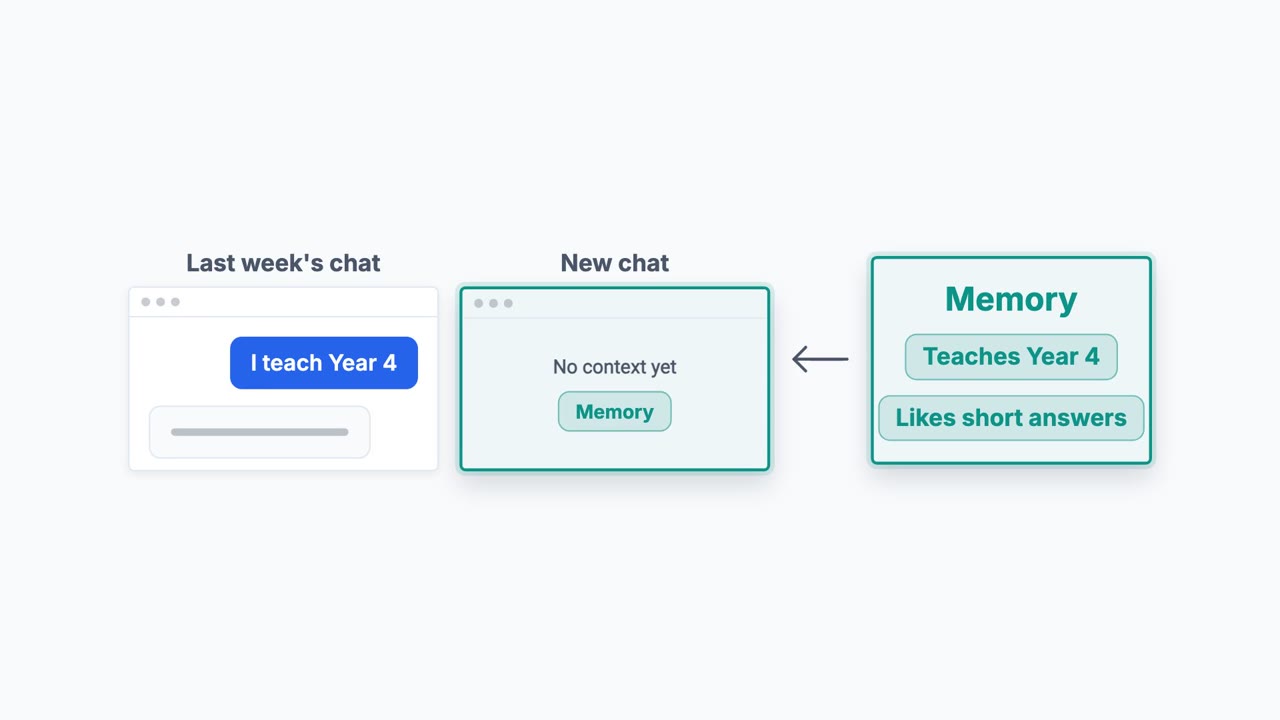
Another correction might fix one draft, but the researchers found that persisting in a conversation that has gone wrong doesn’t work, and their own advice is the move below. Before you leave, ask it to sum up what you’ve agreed in a few short lines. Read the summary and correct anything wrong, because mistakes from the long chat can slip into it. Then open a new chat, paste the summary in, and put your next request underneath. It starts from the parts that worked, without an hour of corrections.
The source is Laban, Hayashi, Zhou and Neville, “LLMs Get Lost In Multi-Turn Conversation” (Microsoft Research and Salesforce Research, May 2025), whose authors suggest the same move, with help pages from Anthropic, OpenAI and Google on long conversations, all read on 14 November 2026. This is an independent explainer, not affiliated with OpenAI, Anthropic, Google or Microsoft.