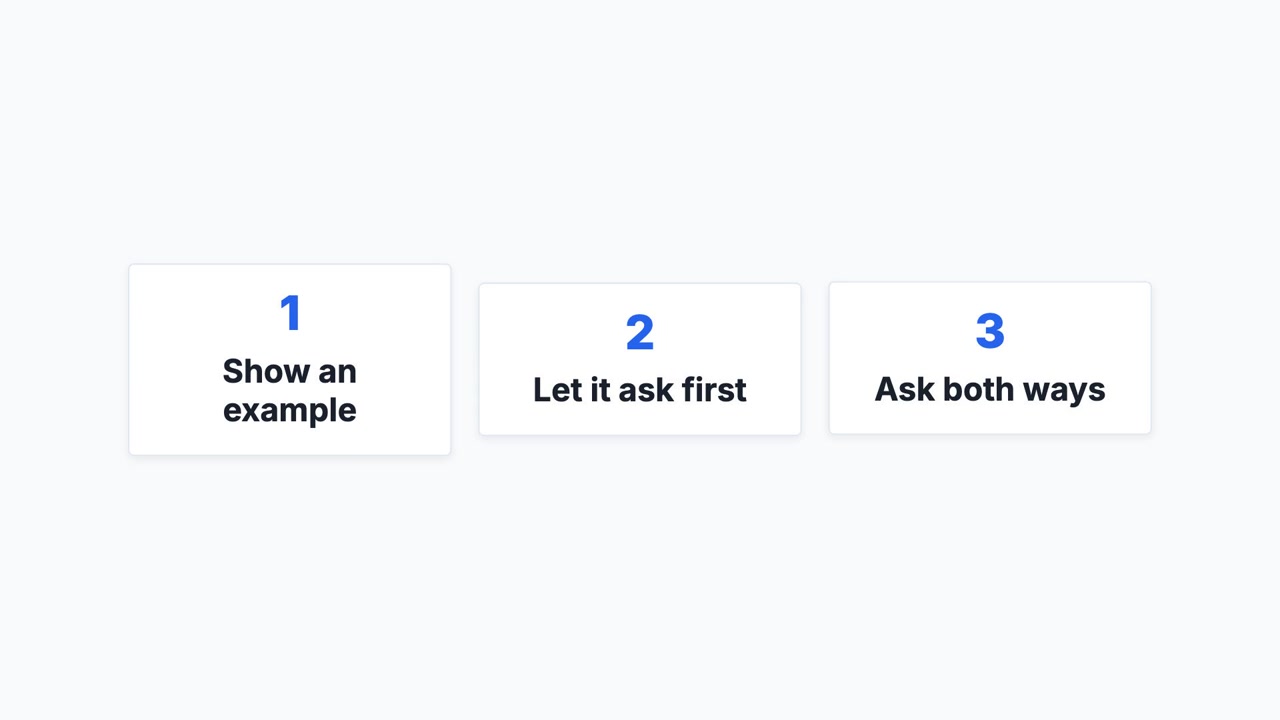
Three habits that get a better answer from an AI chat: show it an example of what you want, let it ask you questions before it starts, and ask for the case for and against instead of whether your plan is good. Each comes with its catch.
Show it an example. Paste in last term’s newsletter piece and ask for this term’s in the same style, and it comes back at the same length and tone. The catch is that an example carries its old details too, such as last year’s winning house, so say which parts are only there for style and give it the new facts separately.
Let it ask you questions first. Given a request with gaps, AI chats tend to answer anyway and fill the gaps with guesses. One added sentence asking it to put its questions to you before it begins swaps those guesses for facts, which is worth the extra step on bigger jobs.
Ask it both ways. AI chats lean towards agreeing with you, and researchers have measured it. In one study, eleven newer AI chats backed the user about fifty per cent more often than people did in the same situation. So ask for the strongest case for your plan, then the strongest case against it. A bare “are you sure?” isn’t a safer check. In one test, AI chats changed their answer about half the time, and many of those changes made a right answer wrong.
The research is Min and others, “Rethinking the Role of Demonstrations” (2022); Kuhn and others, CLAM (2022); AskBench (2026); the OpenAI Model Spec (October 2026); Sharma and others, “Towards Understanding Sycophancy in Language Models” (Anthropic, 2023); Cheng and others (2025); and Laban and others, FlipFlop (2023). This is an independent explainer, not affiliated with any AI company.
The line to keepShow it an example, let it ask you questions first, and ask it both ways.
Transcript of the video
Three habits help an AI chat give you a better answer. You can show it an example, let it ask you questions first, and ask it both ways.
Ask an AI chat for a newsletter piece about sports day, and you get something cheerful and long, in a style that sounds nothing like your school.
Now paste in last term's piece, and ask it to write about sports day in the same style. This time, the new piece has the same length and the same friendly tone.
An example carries its old details too, such as last year's winning house and the date. Say which parts are only there for style, and give it the new facts separately.
Ask an AI chat to plan a parents' evening, and it starts writing straight away. It doesn't know how many families are coming, how long each meeting runs, or whether some families will join by video.
Researchers keep finding the same behaviour. Given a request with gaps, AI chat tools tend to answer anyway, and fill the gaps with guesses.
Add one sentence asking it to put any questions to you before it begins. It comes back with questions about the rooms, the online meetings and the time for each family.
Your answers give it facts in place of guesses. It's worth the extra step on bigger jobs, where a wrong guess would cost you time.
Ask an AI chat whether your plan is a good idea, and the reply tends to come back encouraging. Researchers at Anthropic have measured this tendency.
When the user said they liked an argument, the AI praised it more. When the user said they disliked it, the same argument drew more criticism.
In a study last year, eleven newer AI chat tools backed the user about fifty per cent more often than people in the same situation.
Ask the question both ways. Ask for the strongest case for your plan, then for the strongest case against the plan. Each answer argues one side, so together they give you the risks as well as the reasons.
It's tempting to reply, are you sure? In one study, ten AI chat tools were challenged that way after giving an answer. How often do you think they changed their reply?
They changed about half the time, and many of those changes made a right answer wrong. Asking both ways gives you the two sides, so you can make the decision.
Show it an example, let it ask you questions first, and ask it both ways.
Found this useful?
Subscribe for the next one, or tell me what you want explained. I take requests.