Choosing an AI tool
Video 2:06 Checked

ChatGPT, Claude, Gemini or Copilot: which should you use?

Which AI chat to use depends less on which is best and more on the job, where your work already is and the plan you're on. Where each one is built in, what each can and can't make, the coding tools, what free plans leave out and which privacy setting to check.

Step 4 on the mapSet up the tool you use →
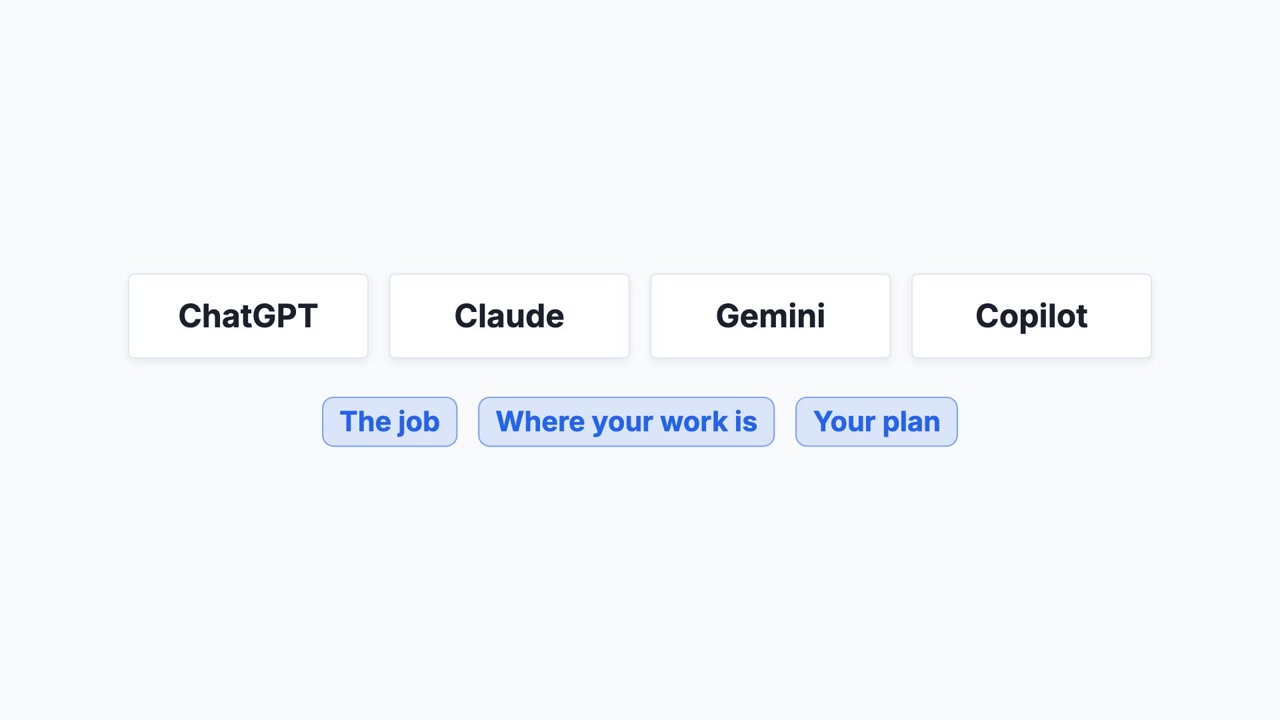
Four plain name cards, ChatGPT, Claude, Gemini and Copilot, above three tags: The job, Where your work is, Your plan.

Should you use ChatGPT, Claude, Gemini or Copilot? It depends less on which one is best and more on three things: the job you need done, where you already do your work, and the plan you’re on.

Where your work already is. Gemini is built into Gmail, Docs and Meet, and Copilot is built into Word, Outlook and Teams. ChatGPT and Claude are separate apps that link to some of your files.

The job. Claude can draw charts and diagrams but doesn’t make pictures, while Gemini makes video as well as pictures on its paid plans. Different makers lead at different jobs. On public tests in October 2026, OpenAI’s model led at making images, Anthropic’s led at building web pages and reading pictures, and the top models were effectively tied for writing. If you write code, the coding tool matters as much as the chat. On one independent test, Claude Code with Anthropic’s top model scored just above Google’s own pairing.

The plan. Free plans leave out each maker’s biggest models, and the main paid plans cost about the same each month, so a free plan is plenty while you’re learning. On a personal account, check the privacy settings. Gemini keeps your chats and can train on them by default if you’re 18 or over, and ChatGPT and Claude let you switch training off.

The facts come from Google Workspace and Gemini help pages, Microsoft’s Copilot FAQ, ChatGPT’s connectors and pricing pages, Claude’s pricing and help pages, Google AI plans and Microsoft 365 plans for the UK, Arena’s category leaderboards (19 October to 2 November 2026), the Artificial Analysis Coding Agent Index (read 6 November 2026) and Gemini Apps privacy help. Plans, prices and rankings change, so check the current pages before you pay. This is an independent explainer, not affiliated with OpenAI, Anthropic, Google or Microsoft.
The line to keepPick the one that fits the way you already work and the jobs you give it.

Transcript of the video

Should you use ChatGPT, Claude, Gemini or Copilot? The answer depends less on which one is best, and more on three things. The first is the job you need it to do. The second is where you already do your work, and the third is the plan you've chosen.

Start with where your work already lives. Gemini is built into Gmail, Docs and Meet, and Copilot is built into Word, Outlook and Teams. If your documents are in Google Docs, Gemini can work on them right there, on a Google work account or a paid plan. ChatGPT and Claude are separate apps, which you can link to some of your files.

Here's a quick test. Which one of the four do you think can't make pictures?

It's Claude. It can draw charts and diagrams, but it doesn't make pictures. Gemini goes the other way, and makes video as well as pictures on its paid plans.

So pick by the job. On public tests in October, OpenAI's model led at making images, and Anthropic's led at building web pages and reading pictures. For writing, the top models were effectively tied.

If you write code, look at the coding tool as well as the chat. On one independent test of coding tools, Claude Code with Anthropic's top model scored just above Google's own pairing.

Your plan matters as well, because free plans leave out each maker's biggest models. The main paid plans cost about the same each month, so price rarely decides it on its own. A free plan is plenty while you're learning.

On a personal account, check the privacy settings. If you're eighteen or over, Gemini keeps your chats and can train on them by default. ChatGPT and Claude let you switch training off.

Pick the one that fits the way you already work and the jobs you give it, and pay for a bigger plan only when the work calls for more.

Found this useful?

Subscribe for the next one, or tell me what you want explained. I take requests.